
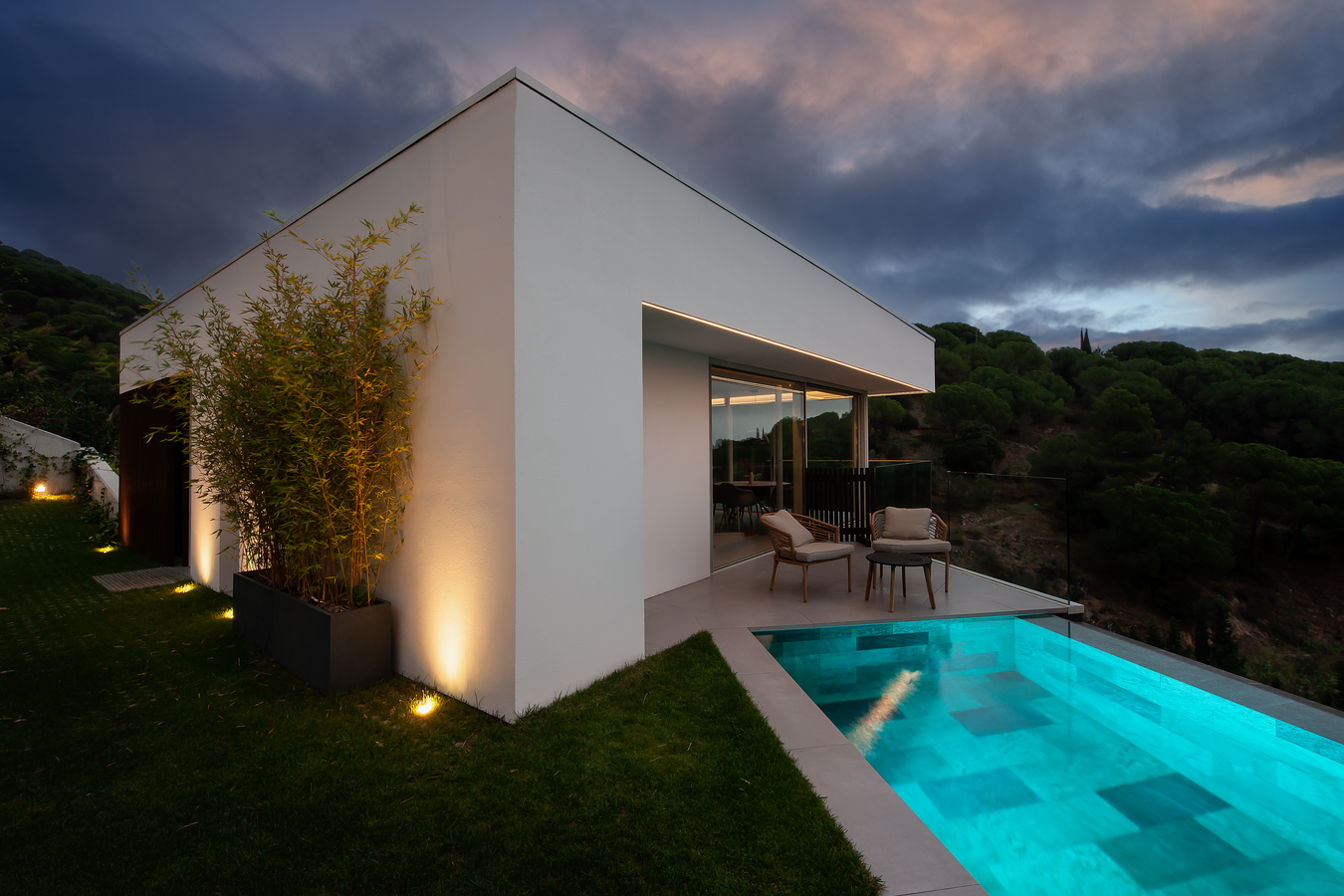
Spotlights or track lighting? Both solutions can create high-quality, architectural lighting in modern interiors, but they differ significantly in installation, flexibility, light distribution and cost. Which option makes more sense depends less on a general “better” or “worse” and more on how the room is used and how permanently the light positions are defined.
1. Spotlights or track lighting – the difference at a glance
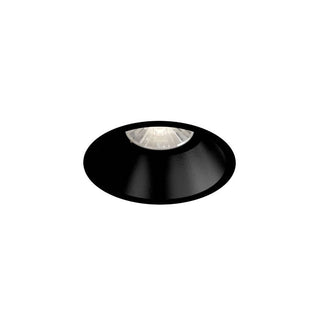
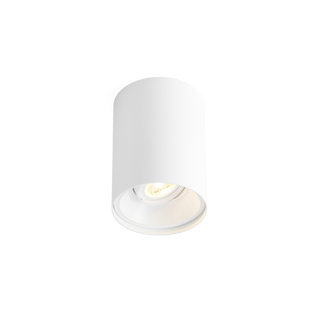
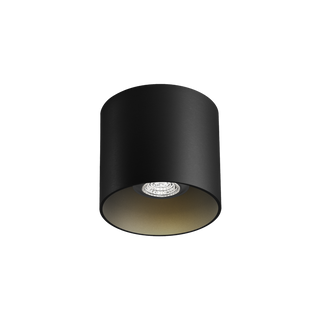
With spotlights, each luminaire sits at a defined position on the ceiling. This can be a nearly flush, discreet recessed spotlight or a surface-mounted spotlight that remains intentionally visible as part of the architecture. The key point is the same in both cases: the electrical connection and therefore the light point are fundamentally fixed.
With a track lighting system, a powered track is first installed on the ceiling. The compatible spotlights are then mounted on the track and, depending on the system, can be moved, redirected, added or replaced. The real difference is therefore not only visual but also practical: should the lighting be permanently planned or remain adaptable later?

2. Costs
There is no universal winner when it comes to cost. A track lighting system requires not only the luminaires themselves but also tracks, power feeds and, where necessary, connectors. This often makes the material cost higher than for individual spotlights.
With fixed spotlights, however, the effort depends heavily on the design. Surface-mounted spotlights do not need a ceiling cut-out and can be relatively straightforward to install when ceiling outlets already exist. Recessed spotlights require suitable openings, enough installation depth and an appropriate ceiling construction. Running cables to several fixed light points can also increase installation effort.
Example orientation for a room of around 25 m²:
| Item | 4 track spotlights | 6 fixed spotlights |
|---|---|---|
| Materials | approx. €640 | approx. €300 |
| Electrician / installation | approx. €250 | approx. €450 |
| Cable / small parts | approx. €40 | approx. €75 |
| Total | approx. €930 | approx. €825 |
These figures are only an example. Actual costs depend on factors such as the luminaire model, spotlight type, ceiling construction, cable routes and local installation conditions.
3. Installation effort
A track lighting system can be especially useful when several light points need to be supplied from one existing ceiling outlet. The track is mounted and powered, and the spotlights are then positioned on the system.
With individual spotlights, every light point must be planned and supplied separately. Surface-mounted spotlights are usually simpler than recessed spotlights because they do not require an opening or installation depth. Recessed spotlights, by contrast, need a suitable ceiling as well as accurately planned cut-outs and installation positions.
4. Light distribution
Fixed spotlights offer a great deal of freedom when planned early: the light points can be positioned independently exactly where they are needed. Depending on the model, fixed or adjustable versions are available.
With track lighting, the spotlights are tied to the path of the track. Within that line, however, they can be moved and aimed very flexibly. This is particularly useful when different areas of a room, artworks or pieces of furniture need to be highlighted.

5. Flexibility for later changes
This is where the biggest difference lies. With individual spotlights, the connection remains in its planned position, regardless of whether the luminaire is recessed or surface-mounted. Adjustable models can change direction, but the position on the ceiling cannot be changed without additional electrical or ceiling work.
With track lighting, spotlights can be moved, added or replaced much more easily. If the dining table is moved later, a piece of art is added or the furniture layout changes, the lighting can often be adapted without installing new ceiling outlets.
6. Visual effect
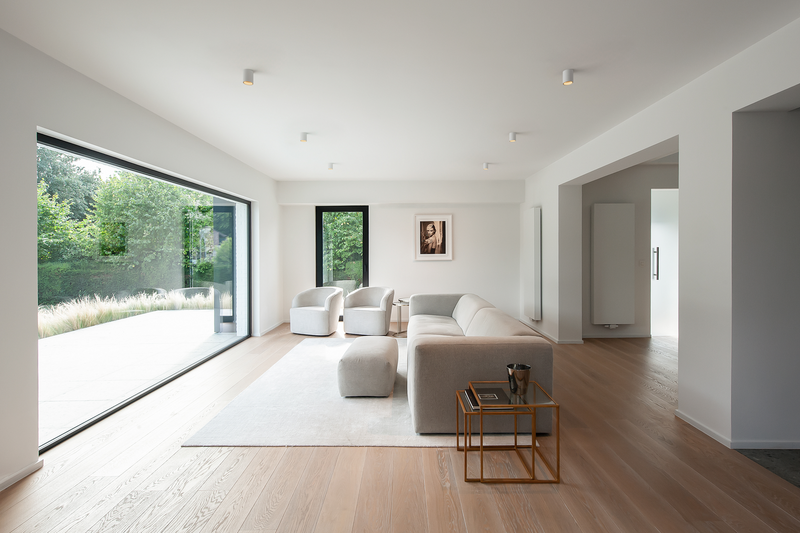
Recessed spotlights look particularly calm and understated because a large part of the luminaire disappears into the ceiling. They suit architecture where the effect of the light should be more prominent than the luminaire itself.
Surface-mounted spotlights remain visible and can deliberately become an architectural element. Clean cylindrical or cubic forms in particular work well in reduced, modern interiors. You can find a selection in our surface-mounted ceiling lights.
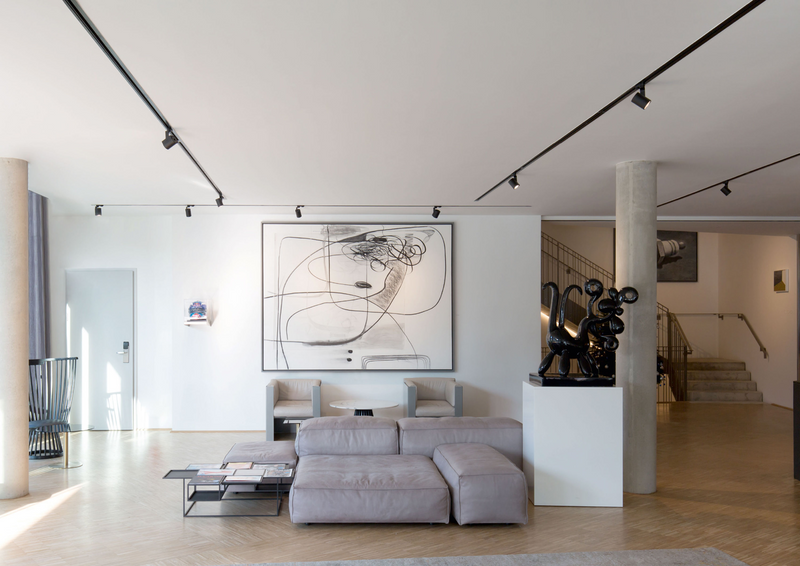
Track lighting systems, by contrast, create a visible linear structure on the ceiling. This can look technical, but a well-planned black or white track can also appear deliberately graphic and high-quality.

7. New build: which option makes more sense?
Both solutions work well in a new build. If the room layout, furniture and use are defined early, individual spotlights can be planned very precisely. Whether recessed or surface-mounted is more suitable then depends mainly on the desired look and the ceiling construction. If you want the lighting to integrate as quietly as possible, take a look at our recessed ceiling lights.
Track lighting is especially interesting in a new build when open-plan living areas should remain flexible or when the exact future position of a table, artwork or furniture is not yet fixed.
8. Existing buildings / renovation: which option makes more sense?
In an existing building, track lighting can offer a practical advantage: several flexible light points can be created from one existing ceiling outlet along the track, without having to create a new outlet for every spotlight.
That does not mean spotlights are unsuitable for renovations. Surface-mounted spotlights can make very good use of existing light outlets and are often installed with relatively little intervention in the ceiling. Recessed spotlights become particularly interesting if a suspended ceiling is already being added or the ceiling is being opened as part of the renovation.

9. When spotlights are the better choice
Spotlights are particularly suitable when:
- the desired light points are already clearly defined,
- individual luminaires should be distributed independently throughout the room,
- you do not want a continuous track visible on the ceiling,
- a particularly calm, integrated ceiling effect is desired with recessed spotlights,
- or visible architectural accents should be created with surface-mounted spotlights.
Depending on the room and ceiling, it is therefore worth considering recessed ceiling lights and surface-mounted ceiling lights separately.
10. When track lighting is the better choice
A track lighting system plays to its strengths when:
- the use of the room may change later,
- furniture, pictures or art should be illuminated flexibly,
- several spotlights should be supplied from one continuous electrical connection,
- luminaires may need to be added or replaced later,
- or the visible track is allowed to become part of the architecture.
For reduced residential interiors, the 1-circuit track lighting system by Wever & Ducré is an interesting example: the track remains comparatively discreet and can be combined with different spotlights. You can find more options under track lighting systems.
11. Conclusion
Spotlights are ideal when the light points can be planned precisely at an early stage and are intended to remain in fixed positions. Recessed spotlights can integrate very quietly into the architecture, while surface-mounted spotlights can deliberately act as visible architectural luminaires. There is therefore no universal cost advantage for “spotlights” in terms of materials and installation – it depends heavily on the chosen design and the ceiling construction.
Track lighting is strongest when flexibility matters more. Material costs can be higher, but the lighting can later be moved, extended or adapted to new furniture, art and changes in the way the room is used much more easily.
The right decision is therefore not simply “spotlight or track?” as a product question. What matters is how firmly the room is planned today – and how flexible it should remain tomorrow.


Leave a comment
This site is protected by hCaptcha and the hCaptcha Privacy Policy and Terms of Service apply.